
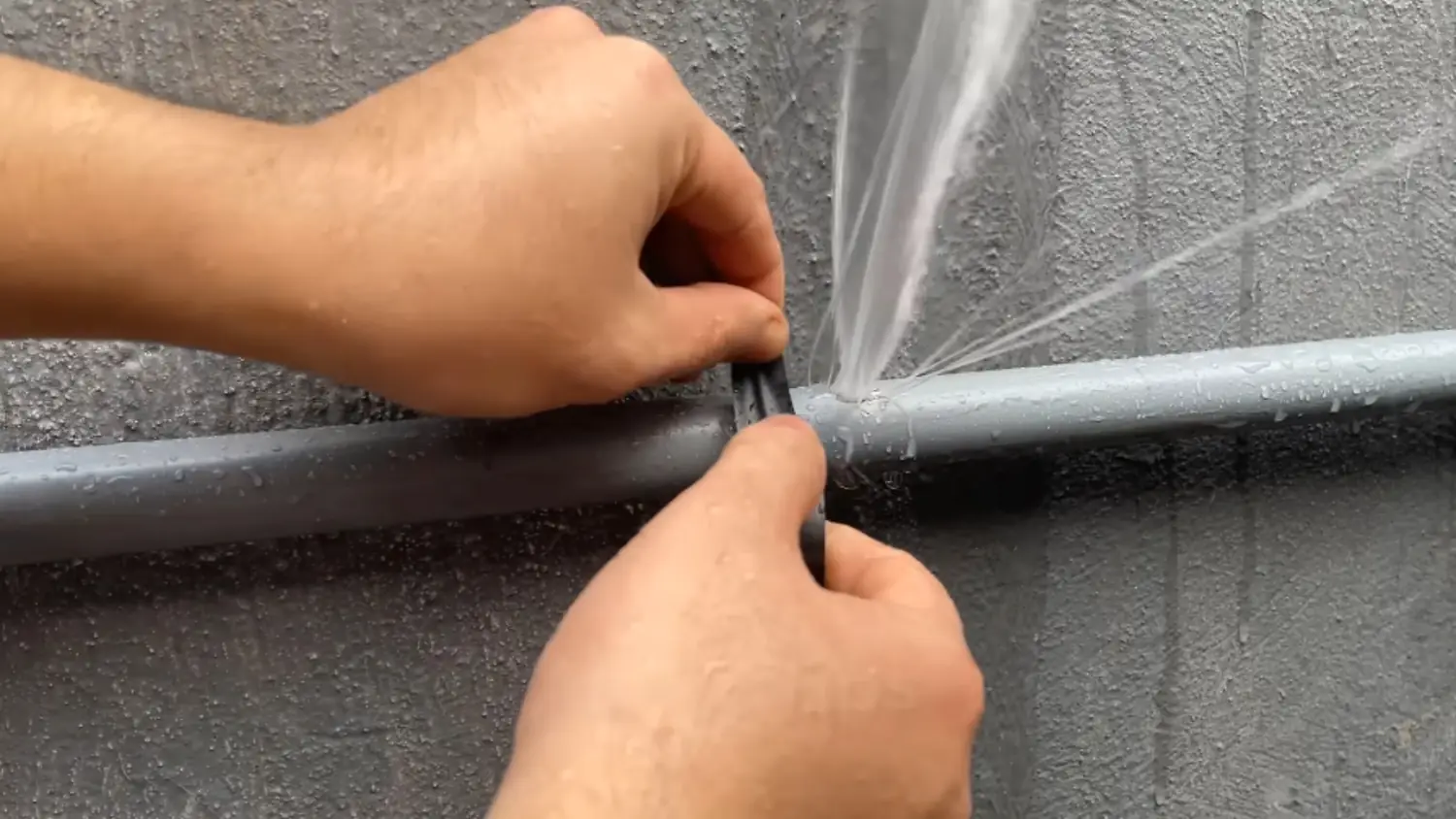
How to tell the pipe is frozen
The clearest sign is that a faucet runs a trickle or nothing, while the others in the house work. Frost on the outside of an exposed pipe, a bulge in a pipe, or a hissing sound can show where the ice is. Pipes in exterior walls, crawlspaces, garages, and attics freeze first.
If one faucet is dry, check whether the cold is the cause. A frozen pipe is usually in a cold zone. A dry hot tap with working cold points to the water heater, not ice. If the whole house has no water, the main line or the meter may be frozen, and you should call the utility and a plumber.
Thawing a frozen pipe safely
Go slowly. A fast thaw can crack a pipe that the ice has already stressed.
Open the faucet.
Leave the tap open so water can flow as the ice melts and relieves pressure.
Apply gentle heat.
Use a hair dryer, a heating pad, or warm towels, starting near the faucet and working back toward the ice.
Check along the pipe.
Look for splits and leaks as the ice melts. A pipe that has split will leak as soon as it thaws.
Keep the heat on.
Open cabinet doors and keep the house warm until the weather moderates.
Do and do not
Some well-meant fixes cause fires and burst pipes.
| Do. | Do not. |
|---|---|
| Use a hair dryer or heating pad. | Use a torch, a heat gun, or any open flame. |
| Keep a faucet open while thawing. | Leave the tap closed and heat a sealed pipe. |
| Know where the main shutoff is. | Wait to find the valve until water is spraying. |
| Call a plumber if you cannot reach the ice. | Break open walls to look for the frozen section. |
If the pipe has already burst
Close the main shutoff right away, and open a faucet at the lowest point of the house to drain the lines. Switch off power to wet areas only from a dry spot. Move belongings away from the water and photograph the damage for your insurer. Then call us.
Our burst pipe repair team answers the emergency line 24/7 and starts by locating the split. Do not wait for the water to stop on its own. A split pipe will keep leaking once the ice thaws, and the thaw can release a lot of water at once.
Prevention before the next freeze
Insulate pipes in garages, crawlspaces, and exterior walls with foam sleeves. Disconnect hoses from outdoor spigots and cover them. On the coldest nights, open cabinet doors under sinks on outside walls and let a faucet drip. Keep the thermostat steady, even if you are away.
Know where your main shutoff is before you need it. If you plan to travel in winter, ask a neighbor to check the house. A house that loses heat for a day in a hard freeze is at risk even if the pipes were fine when you left.
Where pipes freeze first in Georgia homes
In this part of the state, the first pipes to freeze are the ones outside the heated envelope. Hose bibs, irrigation lines, pipes in a vented crawlspace, and supply lines in a garage or on a north wall are the usual casualties. Water heaters in unheated garages can also freeze at the connections.
Pipes run through an exterior wall behind a kitchen sink are another common spot, because the cabinet keeps warm house air away from the pipe. Opening the cabinet door on a freezing night lets room air reach it.
After the thaw
Once water flows, check every joint you can reach for drips and look at ceilings and walls below for stains. A pipe can crack without leaking until pressure returns. Watch the water meter for an hour with everything off, using the steps in our meter guide, to confirm nothing is leaking.
If anything looks wrong, call before the damage spreads. A small split caught early is a short repair. A split left running behind a wall can soak insulation and drywall.
Carrollton, GA note: how often it gets cold enough
According to published climate normals, Carrollton's January mean daily low is about 31.6 degrees, which means many nights drop below freezing in winter. Carroll County's hazard mitigation data lists four winter weather events between 2015 and early 2019, along with winter storm watches, warnings, and advisories. That is enough cold, a few times a year, to freeze unprotected pipes.
Homes in this part of Georgia were often built with less pipe insulation than homes farther north, because freezes were assumed to be rare. A few cheap steps before the first hard freeze cost far less than a repair after it.
If a pipe has split
For a pipe that has split, call the 24/7 line and read our burst pipe repair page for the shutoff steps. If you suspect a slow leak after a freeze, leak detection finds it before it damages a wall. We serve Carrollton and Bowdon, and the service areas page covers nearby towns.
Questions readers ask
Not always. A pipe that is frozen but not split is a warning. A split pipe that is leaking is an emergency. Call the 24/7 line if water is flowing.
No. Pipes can freeze and thaw without splitting. But the risk rises with each freeze.
Pipes in exposed spaces can freeze when the temperature stays below freezing for several hours. January lows near Carrollton average about 31.6 degrees.
On the coldest nights, a small drip from a faucet on an exterior wall helps keep water moving.
Still have a question? Call and ask. Call (770) 214-4545