
Signs your supply pipes are wearing out
Rust-colored or brown water at the tap, especially in the morning, is the clearest sign of corroding steel pipe. Low flow at several fixtures, with the pressure fine at the street, points to mineral buildup narrowing the inside of old galvanized lines. Repeated pinhole leaks mean the pipe wall is thinning along its length.
A single leak is a repair. A second and third leak in a few years mean the whole run is failing, and the next one is usually close. That is when repiping starts to cost less than the repairs.
Check what you have before you decide
Knowing your pipe material is the first step.
- Galvanized steel is gray and dull, and a magnet sticks to it.
- Copper is reddish-brown and a magnet does not stick.
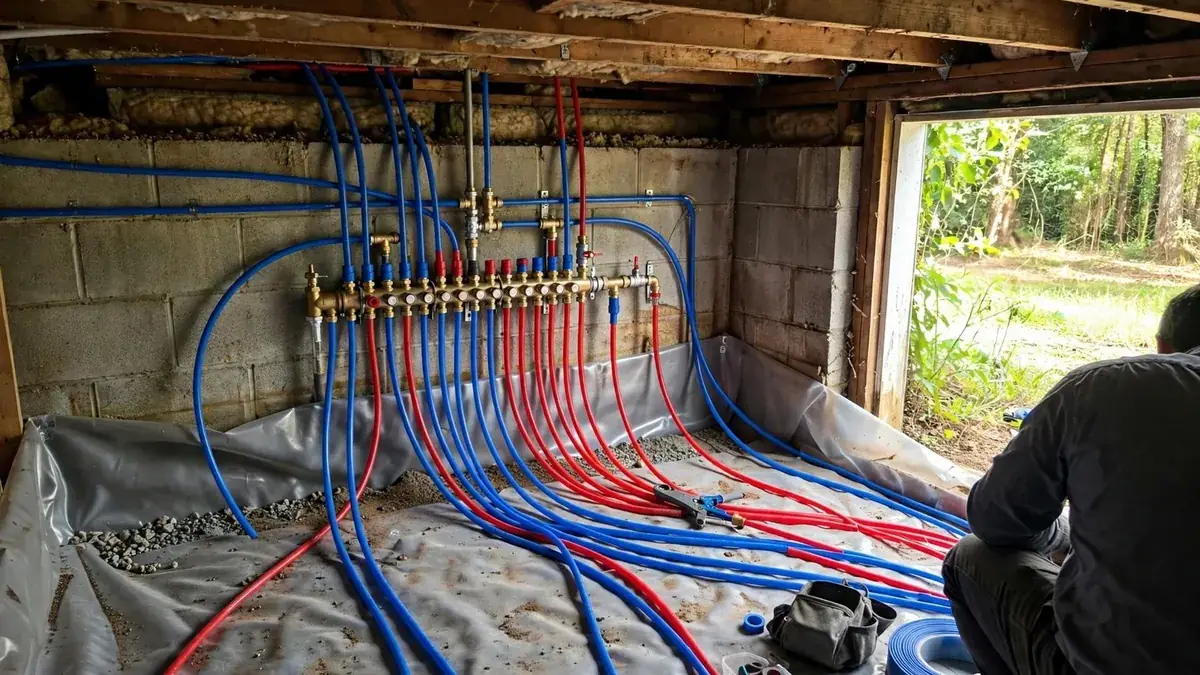
- PEX is flexible plastic, usually red, blue, or white.
- Lead is dull gray and soft. A key scratches it to a shiny silver and a magnet does not stick.
- Polybutylene is flexible gray or blue plastic found in some homes from past decades.
- CPVC is rigid cream or yellow plastic, common on hot and cold lines.
PEX, copper, or both
Both materials work. The choice depends on the house and the budget.
| Material. | Strengths. | Trade-offs. |
|---|---|---|
| PEX. | Flexible, runs through walls with fewer cuts, resists freeze splits better than rigid pipe. | Not for exposed outdoor runs, needs protection from UV light. |
| Copper. | Long track record, tolerates heat and sun. | Higher material cost, more joints to solder. |
| Mixed. | Copper where exposed, PEX through walls. | Requires careful transitions. |
How a repipe project runs
We plan the sequence so you lose water for as little time as possible.
Survey and plan.
We walk the house, locate every fixture, and plan the new routes.
Open as little as possible.
PEX threads through small openings. We patch drywall afterward or leave it ready for your drywaller.
Connect and test.
We connect every fixture and pressure-test the system before closing walls.
Restore and flush.
We flush the new lines, restore water, and check every fixture for leaks.
What Carrollton's service line inventory tells homeowners
The City of Carrollton is developing an inventory of service lines to identify areas where lead and galvanized iron lines may exist. It asks customers who own structures built in 1989 or earlier to check their lines and report back. The page describes a scratch and magnet test to tell the materials apart, and says the utility-owned portion has no known lead pipes.
The EPA says lead pipes are more likely in older homes, built before 1986, and that lead gets into water when plumbing corrodes. If your line or interior pipes are galvanized or you are unsure, a repipe and a water test are worth discussing. The city's water quality report states that its lead and copper results meet the EPA standard, and notes that these metals mostly enter water from corrosion of household plumbing.
How to decide between repairing and repiping
Start by counting. How many leaks have you had in the last few years, and where? If the leaks are all at one fitting or in one wall, a repair solves it. If they are in different places and the pipe looks thin or pitted where it is cut, repiping makes sense.
Then compare costs. Repeated repairs, drywall patching, and water damage add up. A repipe costs more once, but it ends the pattern. We give you both numbers on a site visit so you are choosing with facts.
Protecting your home during the project
We cover floors, move furniture away from work areas, and keep the work zone tight. PEX goes through small openings, so most homes need fewer large wall cuts than they would with rigid pipe.
After the new lines are in, we run water at every fixture, check for leaks, and leave a record of where the new lines run. That record is useful the next time someone cuts into a wall.
Code and permits for this work
Georgia's Department of Community Affairs publishes the state's amendments to the International Plumbing Code (IPC), the standard that plumbing work in Georgia is measured against, and the City of Carrollton issues plumbing permits through its permits office. A repipe is a permitted job in most places, so ask who will pull the permit and who schedules the inspection.
What changes the price of a repipe
Repiping is a project, and scope drives price.
- Home size and number of bathrooms and fixtures.
- Pipe material you choose.
- Number of stories, and whether walls are plaster or drywall.
- Slab, crawlspace, or basement access.
- Whether drywall repair is included.
- Permit requirements.
We quote in writing before work starts. If you are weighing repair against repipe, we put the two numbers side by side.
Repiping questions
Many homes take a few days. We plan so that water is off for as little time as possible.
Usually not. We restore water at the end of each day when possible.
PEX made for potable water is approved for drinking water systems. We use only potable-rated pipe and fittings.
We can identify pipe material and recommend testing. Water testing by a lab confirms what is actually in your water.
We can repipe a section, such as a bathroom or kitchen. See plumbing installation for remodel work.
Not sure what is inside your walls? Call and tell us the age of the house. Call (770) 214-4545