
Toilet emergency: stop the water before anything else
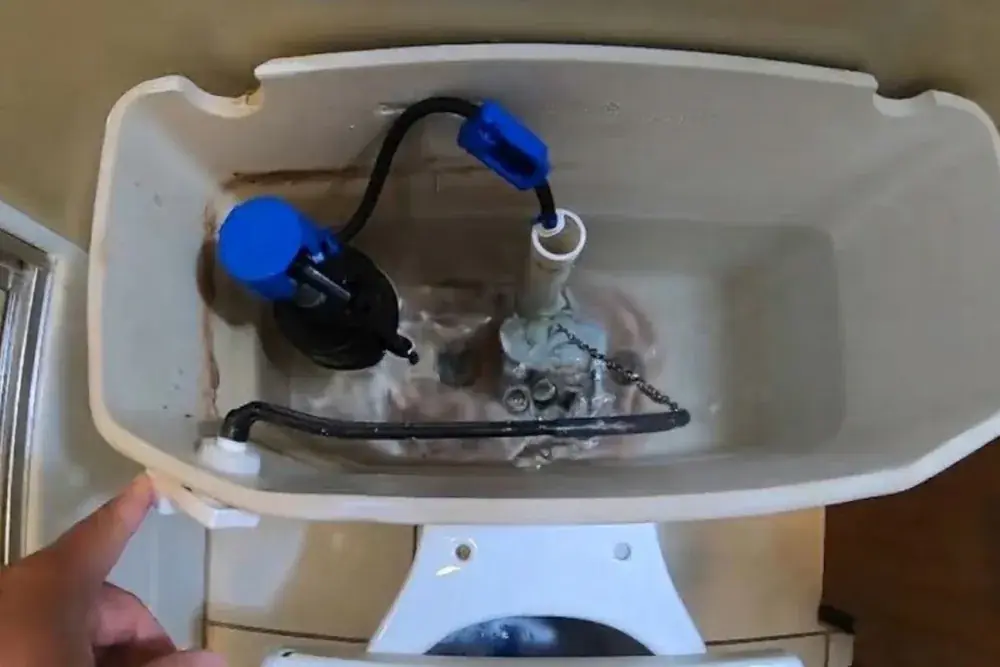
Lift the tank lid and push the float up to stop the fill, or close the small supply valve behind the toilet by turning it clockwise. Do not flush again. Each flush sends more water over the rim.
Lay towels at the base, then call (770) 214-4545. If sewage has come up in the tub or floor drain as well, the clog is past the toilet. That is a main line problem and we send different equipment.
What the symptom points to
Toilet symptoms are specific. Matching them to the part saves a service call.
| Symptom. | Usual cause. | Fix. |
|---|---|---|
| Runs on after flushing. | Worn flapper or a fill valve that will not shut off. | Replace the flapper or fill valve. |
| Phantom refill every few minutes. | Flapper leak. | Replace the flapper and check the seat. |
| Water at the base of the bowl. | Failed wax ring or loose closet bolts. | Pull the toilet and reset with a new ring. |
| Weak flush. | Clogged rim jets or a partial clog. | Clear the jets or auger the trap. |
| Clogs several times a week. | Partial blockage downstream, or a low-flow bowl design. | Camera the line or replace the toilet. |
A quick leak test you can do yourself
The EPA recommends a dye test for toilet leaks. Put a few drops of food coloring in the tank, wait 10 minutes without flushing, and check the bowl. Color in the bowl means the flapper is letting water leak through. Flush right afterward so the dye does not stain the tank.
A silent leak like this can waste a surprising amount of water and shows up on the bill. A new flapper is a small repair and pays for itself quickly. If the dye test is clean but you still hear water, the problem may be in a supply line, covered in our leak detection service.
What happens on a toilet repair call
Most repairs are finished in one visit.
Diagnose.
We watch the fill and flush cycle and check the water level, flapper seal, and supply valve.
Replace the worn part.
We stock flappers, fill valves, handles, and wax rings for common toilets.
Test twice.
We flush several times, check the base for seepage, and run the dye test.
Recommend only what is needed.
If the bowl is cracked or the model is obsolete, we say so and quote a replacement.
When replacing the toilet beats repairing it
A cracked bowl, a rocking base on rotted subfloor, or a model that needs a part no longer made are good reasons to replace. So is a toilet that has clogged for years and has never flushed well, because the trapway design is the problem and no part will change it.
A new toilet installs in about an hour on a sound floor. We set a new wax ring, check the flange, and level the bowl. If the flange is damaged or the floor is soft, we tell you before we set the toilet, because the fix changes the job.
Code and permits for this work
Georgia's Department of Community Affairs publishes the state's amendments to the International Plumbing Code (IPC), the standard that plumbing work in Georgia is measured against, and the City of Carrollton issues plumbing permits through its permits office. Replacing a toilet is a fixture swap in most cases, and the code sets rules for flush volume and the flange connection.
What changes the price of toilet work
A repair costs far less than a replacement, so we diagnose first.
- Which part failed, and how old the toilet is.
- Whether the toilet has to be pulled to reach the wax ring.
- Floor or flange damage found underneath.
- The model you choose for a replacement.
- After-hours dispatch.
A clear price comes first. If you also want a nearby faucet fixed on the same visit, see faucet and sink repair.
Emergency toilet questions
Yes. An overflowing toilet is an emergency, particularly over a finished floor, and the line is open 24/7. Close the supply valve behind the toilet, stop flushing, and call (770) 214-4545.
Yes, especially on an upper floor or a finished surface. Close the supply valve behind the toilet, stop flushing, and call. We take after-hours calls.
Almost always the flapper or fill valve. Both are routine repairs. If you hear it refill by itself, that is a flapper leak.
Often. Sometimes it is a partial clog, and sometimes the toilet design is poor. We check the line and the toilet before choosing a fix.
On a sound floor, about an hour once we are on site. We confirm the rough-in size before the visit so the new bowl fits.
That is usually a failed wax ring. We pull the toilet, inspect the flange and floor, and reset it. Do not keep flushing while it leaks, because water can soak the subfloor.
Not sure which part is failing? Call and describe what you hear and see. Call (770) 214-4545