What a backup looks like
A backup shows up as water or sewage coming out of the lowest drain in the house, such as a floor drain, shower, or tub. Toilets may gurgle or fail to flush. Several fixtures may be slow at once. A smell of sewage near drains is a clue that the main line is blocked.
A single slow sink is usually a local clog. When more than one fixture is affected, especially on different branches, the main line is blocked. The lowest drain overflows first because the water finds the easiest path out.
The first hour
Do these in order.
Stop using water.
Do not flush, shower, or run the dishwasher or washing machine. Every gallon adds to the backup.
Keep people and pets away.
Sewage carries bacteria. Keep children and pets out of affected rooms and avoid contact with the water.
Call a plumber.
Describe which fixtures are affected so we send the right equipment.
Protect belongings.
Move items off the floor and open windows if the smell is strong. Photograph the damage for your insurer.
What to do and what to avoid
Some instincts make a backup worse.
| Do. | Do not. |
|---|---|
| Stop all water use. | Keep flushing to see if it clears. |
| Wear gloves and boots if you must enter. | Walk through sewage barefoot. |
| Call a plumber for the main line. | Pour chemical drain cleaner into a backed-up main. |
| Document the damage. | Throw away damaged items before the adjuster sees them. |
Whose line is blocked?
The line from your house to the connection at the public main is generally the homeowner's responsibility, and the public main belongs to the utility. Where the boundary sits differs from one utility to another, so ask yours. A cleanout in the yard shows the line. If it is full of sewage and the yard is clear of roots, the blockage is probably downstream of the cleanout, possibly in the main.
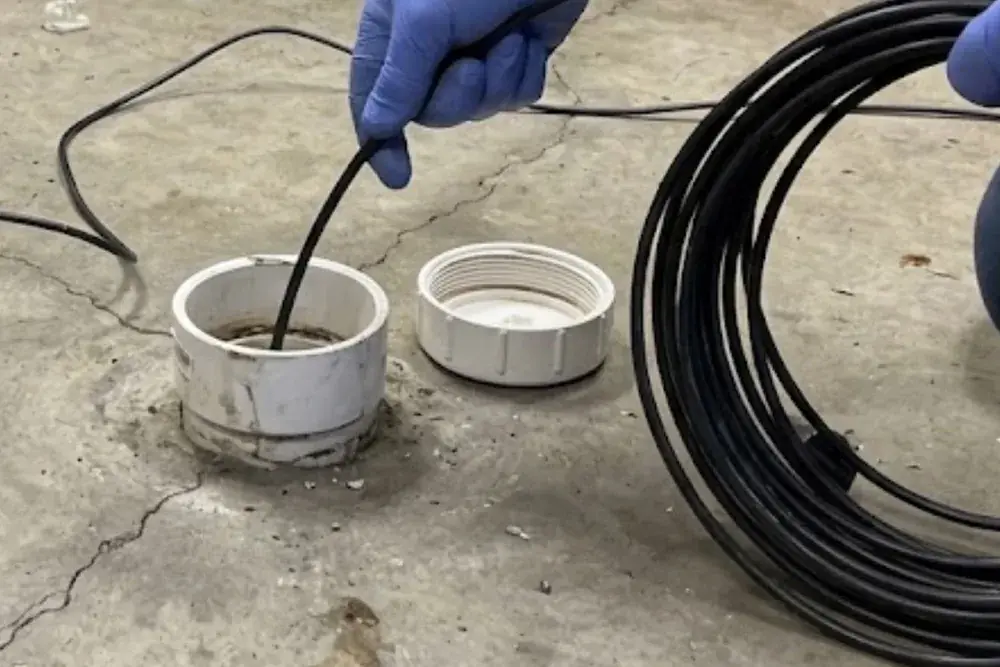
A plumber can tell by running a cable or camera. If the blockage is in the public main, the utility fixes it. If it is in your line, you do. Our sewer line cleaning crews clear the blockage and our camera inspection shows the cause.
Insurance and cleanup
Standard homeowner policies often exclude sewer backup unless you have added coverage. Check your policy so you know what applies. Take photos, keep receipts, and report the loss promptly.
Cleanup is part of the job. Wet carpet, drywall, and insulation that touched sewage should be removed and replaced. A cleanup specialist handles that. We handle the plumbing, then refer you to someone for the cleanup if you need it.
Why mains back up
The usual causes are tree roots entering joints, grease and wipes that collect in the pipe, a belly or sag where debris settles, and aging clay or cast iron that has cracked or collapsed. Heavy rain can also push groundwater into damaged pipe and overwhelm it.
Backups tend to repeat when the cause is structural. If you have been cleared more than once in a year, a camera inspection is the logical next step because it shows what the cable cannot.
What the plumber will do
We start by finding the cleanout and checking how far the blockage sits from it. Then we clear it with a cable or a jetter, run a camera if the cause is unclear, and show you the footage. You get the price for any repair before work begins.
Afterward, flush the line with water to confirm it flows. Ask what to do to prevent a repeat, such as keeping wipes and grease out of drains and trimming roots near the line.
Preventing the next backup
Keep grease out of drains, wipes out of toilets, and roots out of the line. If a camera shows roots or a sag, ask about a repair rather than repeated clearing. Know where your cleanout is and keep it accessible.
Ask about a backwater valve, which can stop sewage from flowing back into the house from the main. It is a plumbing project that needs a permit check, so ask the city what applies to your address.
Carrollton, GA note: utility contacts and digging safely
The City of Carrollton states on its utilities page that it offers water, sewer, and garbage services. Its water billing office is at 770-830-2000 and can direct you to the right department. If you are outside the city, your sewer may be private septic or a different provider.
If the repair needs digging, Georgia 811 is the free service that connects people planning to dig with utilities that mark underground lines. Call 811 before any mechanized digging. Our crews make that call for excavation work we do.
Getting the line cleared
Our sewer line cleaning and sewer line repair teams answer the emergency line, and the Bowdon page explains how dispatch works for towns west of Carrollton. The service areas page lists the rest.
Questions readers ask
Call a plumber first for a blockage in your line. If the plumber finds the blockage is in the public main, contact the City of Carrollton utility office.
Yes. Sewage is a health hazard and floors absorb it quickly. Our emergency line is open 24/7.
Not safely. Main lines need machines, and DIY attempts can harm the pipe and the person.
Often only with added coverage. Check your policy and report the loss quickly.
Still have a question? Call and ask. Call (770) 214-4545