
Slab leak emergency: close the main and call
A warm patch on the floor is one sign. Running water with all fixtures off, a meter that spins when nothing is on, and a sudden jump in the water bill all point to the same thing, a leak beneath the floor. Damp carpet or cracked tile can follow.
Close the main shutoff and call (770) 214-4545. Running water under a slab can undermine soil and soak flooring. A leak on a hot water line can also raise the water heater's workload. We can come out for emergency detection, and the quick diagnosis limits damage.
Why slab leaks happen
Copper lines in concrete slabs rub against concrete and gravel as the house settles and as the pipe expands and contracts. Over many years the wall wears thin. Water chemistry and corrosion of galvanized steel can also pit the pipe from the inside.
Hot water lines fail more often because heat stresses the metal. If your house has a slab foundation, the water supply and sometimes the drain run under that concrete. A slab leak can be on either, and we test both.
How we pinpoint a slab leak
The goal is to open the smallest possible area.
- Meter test to confirm a leak and rule out fixtures.
- Pressure test of hot and cold lines separately.
- Acoustic listening for the sound of escaping water through concrete.
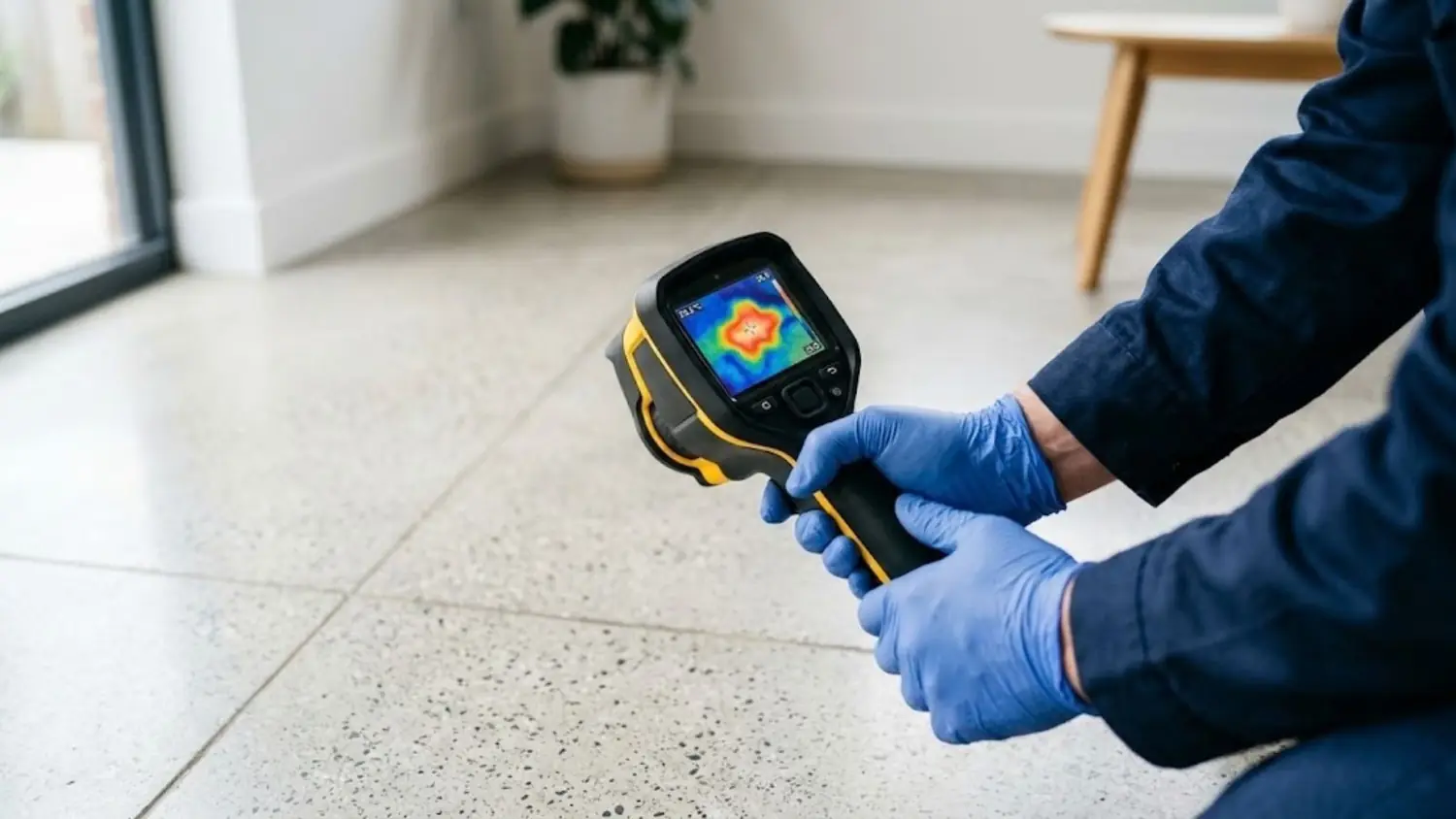
- Thermal imaging to find warm hot water lines.
- Isolation by closing sections of the line.
- Camera inspection if a drain line is suspected.
Slab leak repair options
The choice depends on where the pipe runs and how much damage the leak caused.
| Option. | How it works. | Best when. |
|---|---|---|
| Spot repair through the slab. | Cut concrete over the leak and replace a short section. | The leak is isolated and accessible. |
| Reroute. | Abandon the slab line and run a new line through walls or the attic. | The line is failing in many places. |
| Repipe. | Replace the whole system, see repiping. | Lines are old and leaking repeatedly. |
| Epoxy lining. | Coat the inside of the pipe. | Pipe is sound enough to take the coating. |
Why act quickly in west Georgia
Carrollton averages about 53 inches of rain a year, and a leak adds to the moisture the ground already carries. Water under a slab can soften soil and raise humidity under flooring. Mold needs only moisture and time.
Insurance policies differ on slab leak coverage, and many cover the damage but not the pipe repair. Keep the detection findings and any photos, because insurers usually ask for them.
Rerouting versus breaking the slab
Breaking through a slab is messy but quick when the leak is in one place and the floor above can be repaired. Rerouting avoids the slab: we abandon the failing line and run a new one through the attic or walls to the fixtures. It costs more at first and spares the floors and the concrete.
The right call depends on the pipe. If the camera or pressure test shows several weak spots, a reroute or repipe usually ends the problem. If it shows one isolated failure on otherwise good pipe, a spot repair is reasonable.
After the repair
Once the leak is fixed, we pressure-test the line and monitor the meter. We patch the concrete or hand the area over to your flooring contractor. If a floor was wet, dry it well and watch for musty smells in the following weeks.
Keep copies of the detection findings and the repair invoice. They help with an insurance claim and with the sale of the house later, since a buyer's inspector may ask about past slab work.
Code and permits for this work
Georgia's Department of Community Affairs publishes the state's amendments to the International Plumbing Code (IPC), the standard that plumbing work in Georgia is measured against, and the City of Carrollton issues plumbing permits through its permits office. Rerouting lines around a slab is code work, and a repair that opens the slab may need a permit and an inspection.
What changes the price of slab leak repair
Each slab leak is different.
- How deep the leak is and how accessible it is.
- Hot or cold line, and the pipe material.
- Finished floors above the repair, such as tile or hardwood.
- Whether rerouting through the walls is a better option.
- Repair method: spot, reroute, or repipe.
- Emergency timing.
We quote after the detection step so the price is based on what we found, and you decide before we cut.
Emergency slab leak questions
Yes. Running water under a slab can undermine soil and soak floors, so we answer slab leak calls around the clock. Close the main shutoff, call (770) 214-4545, and we begin detection on the earliest available appointment.
A warm floor spot, a hiss with fixtures off, or a meter that moves are the classic signs. A meter test is the first check.
Not always. We locate the leak first. Spot repair opens a small area. Rerouting avoids the slab entirely.
Yes, if water is flowing. Close the main valve and call the emergency line.
Detection is usually the same day. Spot repairs take a day or so. Rerouting and repiping take longer.
Prolonged leaks can erode soil and contribute to settling. That is another reason to act quickly.
Not sure whether it is under the floor? Call and describe what you hear and feel. Call (770) 214-4545