
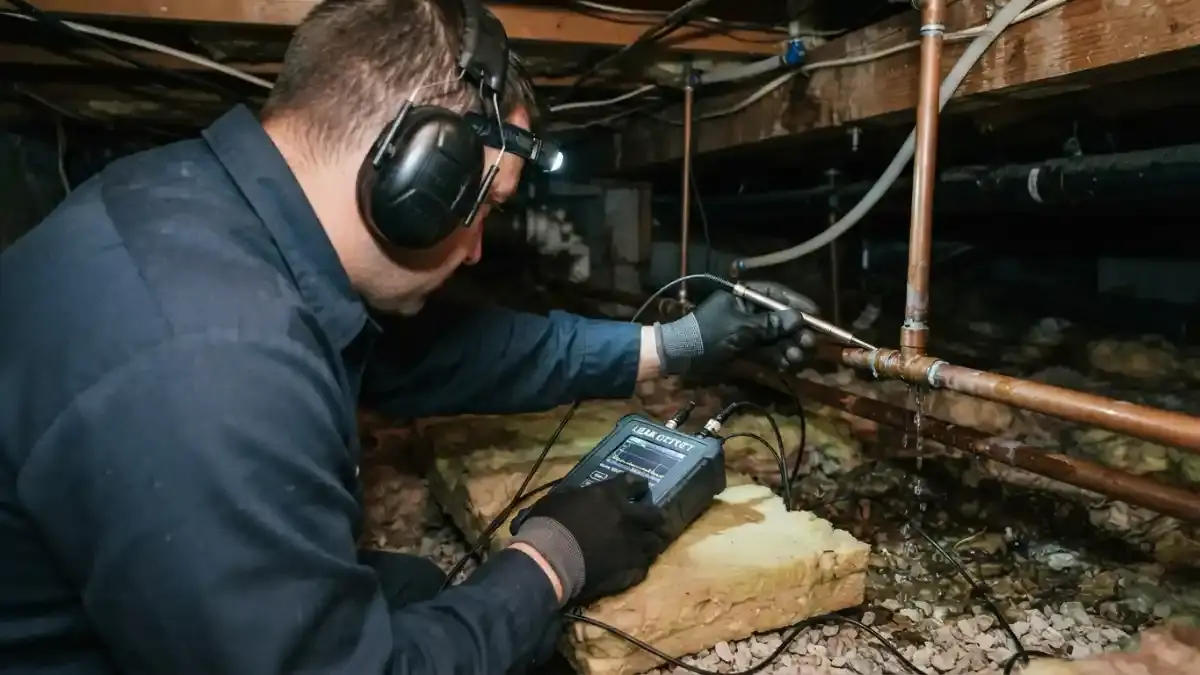
How electronic detection works
A pressurized pipe with a leak makes a sound, a hiss or a thrum, that travels through the pipe, the wall, and the floor. An acoustic sensor placed on the surface picks it up. The technician moves the sensor and listens for the point where the sound is loudest, which marks the leak.
Other tools support it. A thermal camera shows warm patches where a hot water line leaks under a floor. A tracer gas test pushes a harmless gas through a line and finds where it escapes. Pressure tests tell the technician whether the leak is on the supply side or the drain side.
Tools and what each one finds
No single tool covers every situation.
| Tool. | Best for. | Limits. |
|---|---|---|
| Acoustic sensor. | Pressurized metal pipes in walls and slabs. | Plastic pipe carries sound poorly. |
| Thermal camera. | Hot water leaks under floors. | Needs a temperature difference. |
| Tracer gas. | Plastic lines and quiet leaks. | Needs access to fill the line. |
| Pressure and meter tests. | Confirming a leak exists. | Does not locate it. |
What to expect on the visit
A detection visit takes some preparation.
Meter check.
The technician confirms water is leaking by checking the meter with every fixture off.
Isolate sections.
Closing valves in sequence narrows the leak to a part of the house.
Listen and image.
The technician uses the sensor and the camera on the likely area and marks the spot.
Report.
You get the location, the likely cause, and the repair options.
Before the technician arrives
Turn off appliances that use water, such as the dishwasher and washing machine, and do not run any water during the visit. Turn off the ice maker if the line is nearby. Quiet helps, so switch off fans and televisions near the suspect area.
Do a meter test yourself first. The EPA says to read the meter, wait two hours without using water, and read it again. If the meter changed at all, you probably have a leak. Tell the technician what you found.
What detection costs and what it saves
Detection is priced by the time and equipment needed, and the factors are the size of the property, how many methods the job needs, and how accessible the pipes are. We give a clear price before work starts and explain what each step will do.
The comparison that matters is against opening walls to look. A technician who guesses at the leak location may cut several holes. Detection aims for one. If the leak is also causing damage, the faster you act, the smaller the damage.
What detection cannot do
Detection is not magic. It struggles with very small leaks in plastic pipe, noisy environments next to a busy road, and leaks in lines the technician cannot pressurize. Some leaks need a combination of methods, and a few need exploratory opening to confirm.
A good technician tells you when the confidence is high and when it is not. If the leak is on the drain side, a camera is the better tool, and we cover that on our sewer camera inspection page.
Preparing for a leak detection visit
Before the technician arrives, note where you have seen damp spots, stains, or heard running water. Write down meter readings and when your bill rose. Clear access to the water meter, the main shutoff, and any suspect walls or floors.
Tell the technician about past repairs and what pipe materials you have. That history narrows the search and shortens the visit.
What a result should look like
A good report names the area, the method that found it, and how sure the technician is. A marked spot on the floor or wall is more useful than a general statement. Ask for photos or a short note you can keep for your insurer.
If the tools disagree, a second method such as a pressure test confirms the finding before anyone opens a wall.
Carrollton, GA note: service lines and household leaks
According to the City of Carrollton, it is building a water service line inventory and it asks owners of structures built in 1989 or earlier to check their service line material. Galvanized steel lines, which the city's page describes, corrode from the inside and can leak at joints. Knowing your line material helps the technician pick the right method.
The EPA estimates that the average household wastes more than 9,300 gallons of water per year to leaks, and that about nine percent of homes leak 50 gallons or more per day. Many of those leaks are silent.
Where to go from a confirmed leak
Our leak detection visits use acoustic and thermal tools and give you a marked location. If the leak is under a concrete floor, our slab leak repair page covers spot repair and rerouting. We serve Carrollton and Bowdon, and the service areas page lists the nearby towns we reach.
Questions readers ask
In skilled hands it narrows a leak to a small area, often a few feet. Results depend on pipe material, depth, and background noise.
Only at the spot the tools identify. That is the point of detection: open one small area instead of many.
The city's service line inventory page describes a scratch and magnet test. Structures built in 1989 or earlier are asked to check.
Often. See our slab leak repair page for what follows.
Still have a question? Call and ask. Call (770) 214-4545